

Blog
Vitamin D for Health: Why This Essential Nutrient Matters More Than Ever


Vitamin D is one of the major nutrients for long-term health and, at the same time, it is among the vitamins people most commonly lack. The vitamin gets its nickname as the “sunshine vitamin” because naturally, skin exposure to sunlight produces it. Long indoor hours, sunscreen application, climatic condition changes plus limited sun availability in some areas hinder natural production of Vitamin D nowadays. This makes dietary sources and high-quality supplementation very important toward achieving and maintaining the optimal levels of Vitamin D that would support the body’s main functions and vitality.
How Vitamin D Helps Boost Immunity Mood and Daily Energy
The great function of Vitamin D is in the strength of immunity. Vitamin D makes strong immune cells that fight against bacteria and viruses at the same time control inflammation. People with low Vitamin D often get more infections in the season, take a long time to recover, feel tired frequently, and have lowered resistance to illness. Healthy levels of Vitamin D in the body help create strong immune resilience and also steady energy levels all day.
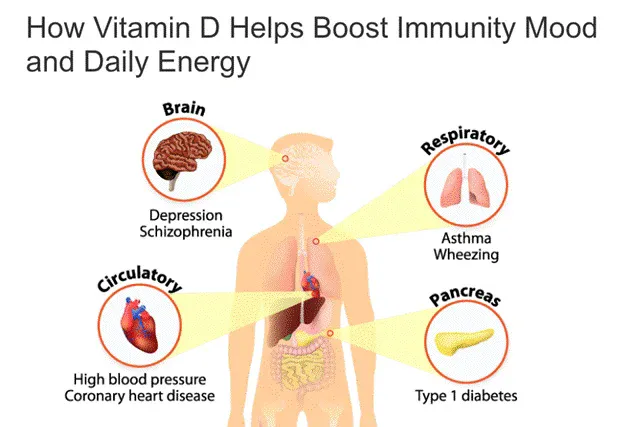
Vitamin D also has a great function in the regulation of moods and emotional stability. It helps in the provision of serotonin, which helps convey happy feelings as well as feelings of calmness and stable emotional conditions. Vitamin D deficiency precipitates mood swings and irritability, increased stress, and brain fog. For many people who try to stay indoors most of the time, this nutrient found to be deficient when improved resulted in better mental clarity, emotionally steady feelings, and positive thinking about life.
- Vitamin D has much to do with the cognitive function of an individual.
- Some studies have indicated that it ensures brain cell protection, supports brain development, and maintains healthy neural communications, which is what higher levels of Vitamin D essentially represent.
- Having adequate memories about what happened and good concentration are long-term cognitive health benefits related to high Vitamin D levels. “Focus” is a byproduct primarily found in workers performing their labor inside buildings located within regions having low sunlight when their Vitamin D level falls under the optimal range.
Vitamin D also improves daily energy and metabolic support. It regulates calcium and phosphorus, thereby making available the elements necessary to build up muscle strength and generate energy at the cellular level. People who have low Vitamin D have unexplained fatigue most of the time, weakness of the body, and low endurance even after a good rest. Steady energy and improved stamina as well as physical performance in day-to-day activities and exercise routines are results of having optimal Vitamin D levels.
Vitamin D Support for Bones Muscles and Long-Term Health
Vitamin D Support for Bones Muscles and Long-Term Health
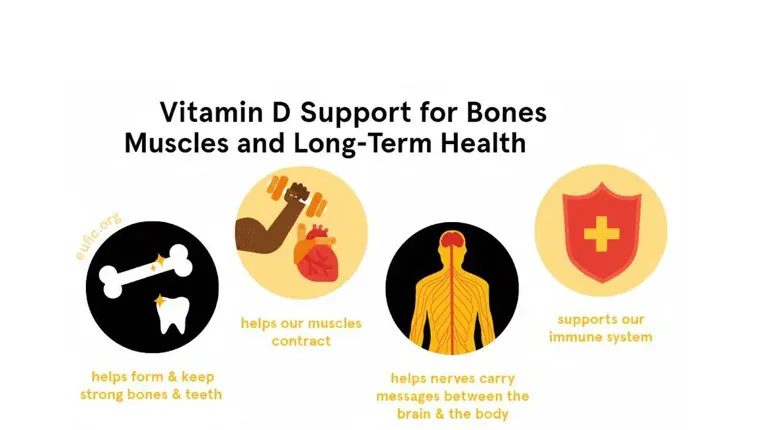
Vitamin D is best known for its critical role in bone health. It supports calcium absorption, ensuring that bones remain strong, dense, and resistant to fractures. Without sufficient Vitamin D, bones can become brittle or soft, increasing the risk of conditions like rickets in children and osteomalacia or osteoporosis in adults. Ensuring adequate Vitamin D throughout life is essential for preventing age-related bone loss and maintaining skeletal health.
- Vitamin D͏ is very important for muscle strength and coordination.
- It will support neuromuscular function, assist muscle contraction, and give strength to maintain balance.
- Its deficiency may promote muscle cramping as well as aching muscles its deficiency in the population promotes falling in the elderly population.
- Athletes and active individuals appreciate Vitamin D as nutrients in recovery, endurance, and general physical performance. A good level can make sure fewer injuries post-workout and fast muscle repair.
Vitamin D has a function in cardio and metabolic health. It can regulate blood pressure, support healthy insulin function, and provide for hormonal balance. This will keep the household out of harm’s way from getting the metabolic syndrome, type 2 diabetes, and cardiovascular disorder. Good Vitamin D levels facilitate good circulation as well as metabolic response and general health in total.
Natural sources are salmon, sardines, fortified dairy or plant-based milk, egg yolks, and sunlight-exposed mushrooms. It is practically impossible for most people to meet the daily requirement through food intake. This makes supplementation with D3 the best solution for those who do not get much exposure to the sun, are of a darker skin color, or have increased nutritional needs because of age, lifestyle, and activity level. Including nutrient-dense additions like Viva Naturals cacao powder in daily meals can further complement overall wellness efforts by supplying antioxidants and minerals that support daily vitality.
As long as there is a regular supply of Vitamin D either from the sun, diet, or good supplements, it will support immunity, strong bones and muscles, good mood, cognitive function, and long-term vitality and resilience.
Why Is Vitamin D Important?
Vitamin D, the “sunshine vitamin,” is essential for strong bones and teeth by supporting calcium and phosphorus absorption. It also boosts immune function, helps protect against infections, and supports mental well-being, with low levels linked to depression and seasonal mood changes.
Sources of Vitamin D
| Source Type | Details |
| Food | Naturally found in fatty fish (salmon, mackerel, tuna), fish liver oils, beef liver, egg yolks, and cheese. In the American diet, most vitamin D comes from fortified foods such as milk, plant milks, orange juice, and breakfast cereals. |
| Sun Exposure | The body produces vitamin D when skin is exposed to sunlight. Synthesis varies based on season, time of day, geographic location, cloud cover, skin pigmentation (melanin), age, and sunscreen use. |
| Dietary Supplements | Available as vitamin D2 (ergocalciferol) and vitamin D3 (cholecalciferol). Both raise blood levels of 25(OH)D, but vitamin D3 is more effective and maintains higher levels for longer. |
| Fortified Foods | Many staple foods are fortified with vitamin D, including cow’s milk, plant-based milks, yogurt, margarine, orange juice, cereals, and some breads. These are major contributors to vitamin D intake, especially for those with limited sun exposure. |
| Mushrooms (Especially UV-Exposed) | Certain mushrooms exposed to ultraviolet (UV) light naturally produce vitamin D2. UV-treated mushrooms can provide significant amounts of vitamin D, making them a valuable plant-based source. |
Our Research Based References:
Holick, M. F. (2007). “Vitamin D deficiency.” The New England Journal of Medicine, 357(3), 266–281.
Bouillon, R., et al. (2019). “Vitamin D and human health: lessons from vitamin D receptor null mice.” Endocrine Reviews, 40(4), 975–1017.
Pludowski, P., et al. (2018). “Vitamin D supplementation guidelines.” Journal of Steroid Biochemistry and Molecular Biology, 175, 125–135.
Autier, P., et al. (2014). “Vitamin D status and ill health: a systematic review.” The Lancet Diabetes & Endocrinology, 2(1), 76–89.
Ginde, A. A., et al. (2009). “Association between serum 25-hydroxyvitamin D level and upper respiratory tract infection.” Archives of Internal Medicine, 169(4), 384–390.
Walker, V. P., & Modlin, R. L. (2009). “The vitamin D connection to pediatric infections and immune function.” Pediatric Research, 65(5 Pt 2), 106R–113R.
Kennel, K. A., et al. (2010). “Vitamin D deficiency in adults: when to test and how to treat.” Mayo Clinic Proceedings, 85(8), 752–758.
Bolland, M. J., et al. (2014). “The effects of vitamin D supplementation on skeletal, vascular, or cancer outcomes.” The Lancet Diabetes & Endocrinology, 2(4), 307–320.
Ju, S. Y., et al. (2013). “Low vitamin D status and the risk of depression: a systematic review and meta-analysis.” Journal of Affective Disorders, 149(1–3), 106–111.
Pfeifer, M., et al. (2002). “Effects of vitamin D and calcium supplementation on falls: a randomized controlled trial.” Journal of Bone and Mineral Research, 17(1), 294–300.
